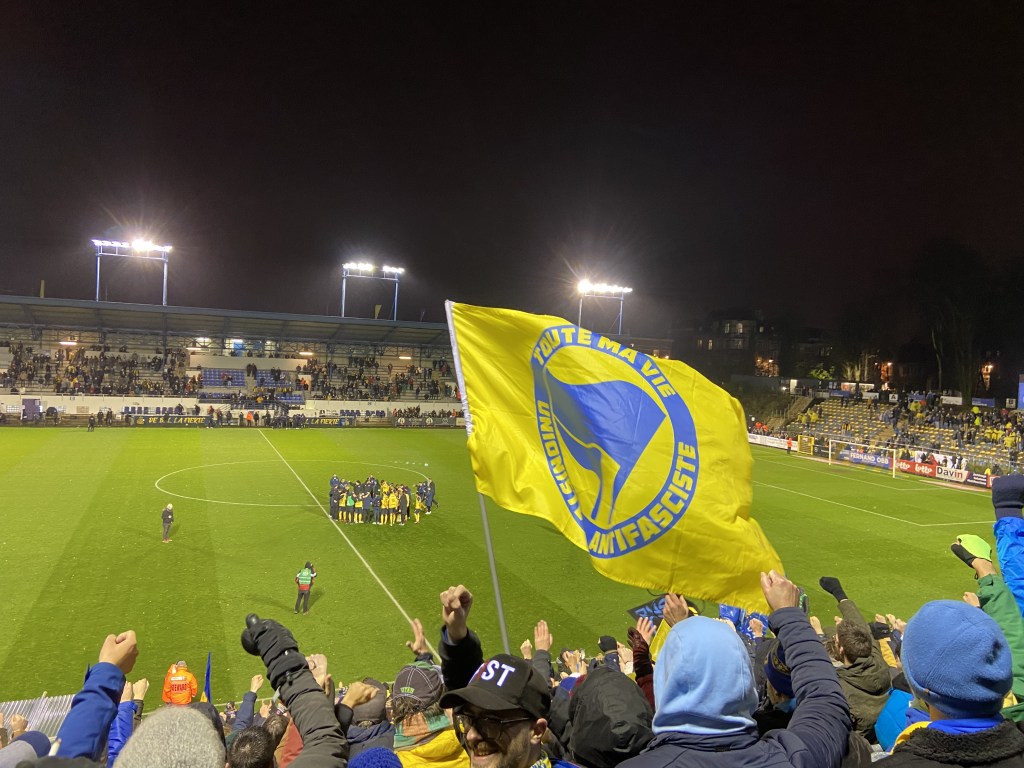
“Bruxelles, ma ville, je t’aime” rings out on yet another cold and wet Brussels evening. But it’s true, Brussels is now my city and yes, I love her. And that’s okay.
You see in British football, second teams aren’t allowed. Sure, some may have soft spots for other clubs. In recent years, Brighton have become the perennial pundit pleasers, whilst punters from across the North West seem to have rediscovered their Wrexham roots with the help of a couple of Hollywood stars. Despite these flirtatious overtures, these would be seen as no more than a fling.
But football is about so much more than the sport. The cultural level is where the magic lies. This cultural level however is often neglected in this current age of social media and streams. As with so many things in the modern world, globalisation and business demands are at the core of the issue. How many fans sit happy behind their screen offering up opinions but haven’t set foot in the stadium? Sure, they can watch a game for 90 minutes and analyse some stats, but the heart also has a role to play. There’s more to a club than the eleven players that take to the pitch.
Why is this culture important? Well moving to a new city, let alone a new country, can be tough. Sure, fan groups and supporter networks exist but these ties still lie back in the heartlands. Cultural integration can be one of the most difficult demands of a new city dweller. But football can certainly help.
Take, for example, my now beloved USG. When I first moved to Belgium in 2019, I’d be lying if I said I’d ever heard of the club. Belgian football isn’t exactly top of the list when you come from a country with the glitz and the glamour of the Premier League.
Even as an avid football fan, my knowledge of Belgian football fan was limited. Anderlecht had the history and produced names like Vincent Kompany and Jan Vertonghen whilst Club Brugge boasted the majority of modern success. Lowly USG were scrapping it out in the Challenger Pro League, one division below the Jupiler Pro League. The club was making do with a mixture of players discarded from their parent clubs, lower league scrappers and loanees from across the football pyramid.
The first time I was invited to visit the Stade Marien, I thought “sure, why not”. Growing up in Cheshire as Man United fan, I was used to the history and stature of Old Trafford. Whilst Old Trafford might be “falling down” as the new chants go, it’s an iconic amphitheatre. Now, to say the Stade Marien was even at the standard of Stockport County’s Edgeley Park would be a push. The coloured seats fixed onto the concrete reminiscent of the footage you’d see of games from the 80s. Weeds growing through the beer drenched standing blocks in the terraces.
But it’s from here that its charm began to win me over. It’s on these crowded stands that the beauty of Brussels comes to the fore. Stand and listen pre game and you can hear conversations in at least 5 different languages. Fans of all nationalities, genders and ages are all welcome under the banner of the “Union Bhoys”. Despite the language barrier when the whistle blows, this straggle of strangers becomes one, united. A union. For the next 90 minutes nothing else matters apart from giving your all for the boys in yellow and blue.
It’s from here you reap the cultural benefits of fandom. The Belgian irony as Vamos a la playa rings out at full time. The history of an art deco stadium set back into the surroundings of an overgrown forest. Unpolished and imperfect, much like the charm of Brussels itself. The half pints of Jupiler and inane conversations which go on long into the night. It’s integration at its finest.
Yes, Man United will always be number one in my heart. They’ll always have the history, my childhood memories and my connection to home. They’ll also be my club. But in this modern world where anything goes, there’s space for two. As a wise Mancunian musician once said “I miss the city I love but I’ve been having an affair if you should care”.
 Between the Lynes